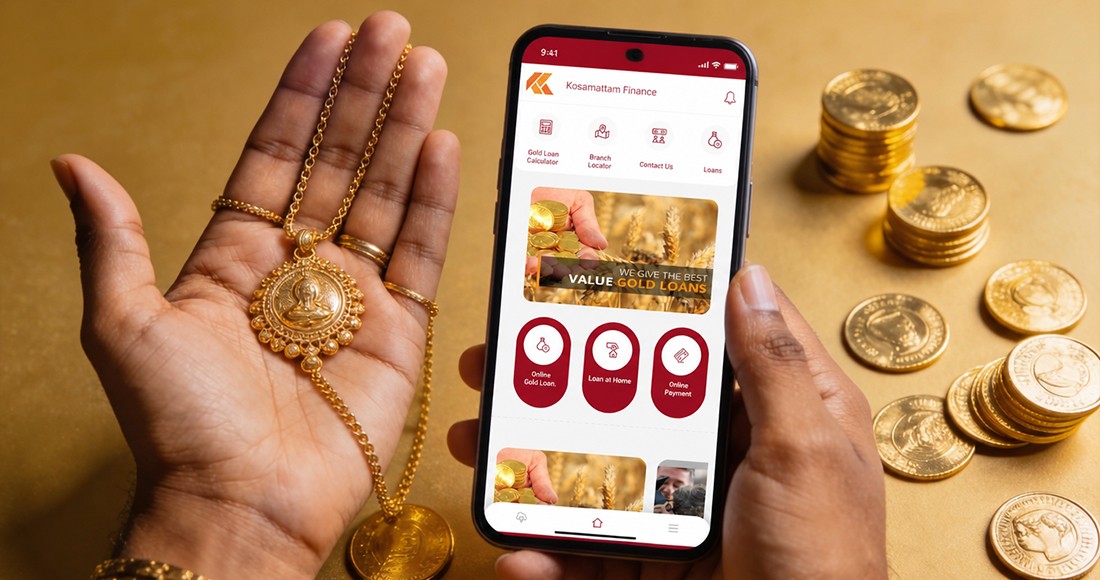
Why Gold Loans Are Booming in 2026: Key Reasons Every Borrower Should Know
Gold loans are growing faster than ever in 2026 thanks to record gold prices, RBI’s new LTV norms, instant digital disbursal, and lower interest rates. Here’s why millions of borrowers are turning to gold-backed credit.
Quick Answer
Gold loans are booming in 2026 primarily because gold prices have hit record highs (unlocking larger loan amounts), the RBI has raised LTV ratios to 85% for small loans, digital disbursal has made the process nearly instant, and borrowers are increasingly choosing gold loans over personal loans for their lower interest rates and minimal paperwork.
Introduction
Let's be honest: most people in India didn't wake up one day and decide to "invest in gold loans." For generations, pledging your grandmother's bangles felt like a last resort, something you did when things got really tough. But something has shifted dramatically in 2026, and it's not just the gold price.
Today, a young entrepreneur in Coimbatore might pledge gold to fund working capital. A salaried professional in Kochi might use it to bridge a cash crunch before their salary hits. A farmer in Andhra Pradesh might prefer it over a microfinance loan. Gold loans have quietly become one of the most versatile financial tools in the Indian borrower's arsenal.
So, what is actually happening? Let's break down exactly why the gold loan market is growing at its fastest pace in years, and what every borrower should understand before they walk into a lender branch or tap "apply" on an app.
8 Key Reasons Gold Loans Are Booming in 2026
1. Record Gold Prices Have Made Every Gram More Powerful
₹1.32 lakh per 10g in 2025 market rallies.
When gold prices rise, the math becomes very simple: the same ring that could fetch you ₹80,000 last year might get you ₹1.1–1.2 lakh today. Indian households collectively hold an estimated 25,000 tonnes of gold, and with prices staying elevated through 2025–26, this idle jewellery sitting in home lockers has transformed into a high-value credit asset. Borrowers can access significantly larger loan amounts without pledging more jewellery than before. For someone with a medical emergency, a business need, or a child's education fee, this makes gold a far more practical option than it was even two years ago.
2. The RBI's New LTV Relaxation Changes the Game
Up to 85% LTV from April 2026
This is one of the most significant regulatory shifts in recent years. Effective April 1, 2026, the Reserve Bank of India introduced tiered Loan-to-Value (LTV) ratios. For loans under ₹2.5 lakh, borrowers can now access up to 85% of their gold's value, up from the long-standing 75% cap. Loans between ₹2.5 lakh and ₹5 lakh can access 80%, while those above ₹5 lakhs continue at 75%. In plain terms: you can borrow more against the same amount of gold. For smaller borrowers and households in semi-urban and rural India, this is a direct lift in credit accessibility.
3. You Can Get a Gold Loan in Under 30 Minutes, Sometimes Instantly
Digital-first disbursal now standard
The speed of gold loan processing has improved almost beyond recognition. While physical gold verification still needs to happen in person, the entire surrounding experience, KYC, valuation, disbursal, repayment, is now digital-first at most major NBFCs and banks. Borrowers walk in, their gold is weighed and valued, and the money hits their account in minutes. For someone with an urgent need, a hospital bill, a supplier payment, school fees, this immediacy is priceless. Search trends confirm this: keywords like "instant gold loan," "gold loan near me," and "online gold loan" consistently rank among the highest-intent financial searches in India today.
4. Gold Loans Beat Personal Loans on Interest Rates, Often by a Wide Margin
Gold loan rates typically 8–14% vs 14–24% for personal loans
Interest rates are sharper and more competitive in 2026 than ever before. Banks typically offer gold loans at 8–12% per annum, while NBFCs sit in the 12–14% range, well below the 14–24% range most personal loans carry. Since gold loans are secured (your gold is the collateral), lenders carry significantly lower risk, and they pass part of that saving to you. For borrowers who need funds for 3–12 months, a gold loan is quite simply cheaper. And with flexible repayment options, bullet repayment, EMI, interest-only servicing, borrowers can structure repayment around their cash flow.
5. No Income Proof, No Credit Score Barrier
Documentation minimal; no CIBIL score required
This might be the most democratizing feature of gold loans. Unlike personal loans or home loans, gold loans don't require income tax returns, salary slips, or a strong CIBIL score. Your gold is your credit score. This matters enormously for India's vast informal economy, daily wage earners, self-employed individuals, small traders, gig workers, and rural households who may have no formal income trail but have inherited jewellery. In 2026, this segment is actively moving from unorganized moneylenders (who often charge 24–36%) to banks and NBFCs. That shift is reflected directly in market data.
6. MSMEs and Gig Workers Are Driving New Demand Segments
Urban professionals and small businesses now key borrowers
Gold loans were once considered the domain of rural and semi-urban borrowers with limited formal credit access. That image is rapidly changing. In 2026, demand is expanding sharply into urban professionals, gig economy workers, and small business owners who want fast, flexible credit without the burden of collateral evaluation delays. A small restaurant owner pledging gold to pay vendors, a freelancer bridging income gaps, a micro-entrepreneur funding a seasonal inventory purchase; these are now real and growing borrower profiles. Lenders have noticed, and many have launched dedicated products for this urban segment with faster processing, app-based management, and flexible tenures.
7. Organized Lending is Replacing the Village Moneylender
Organized sector AUM projected to hit ₹15 lakh crore by March 2026
NBFCs and dozens of banks have aggressively expanded their branch networks and digital capabilities. Organized gold loan AUM reached approximately ₹11.8 trillion by March 2025 and is projected to reach ₹15 lakh crore by March 2026. Yet remarkably, the organized sector still accounts for only about 5.6% of India's total gold loan potential, which means the upside ahead is enormous. Every new branch opened in a tier-3 town; every app launched for first-generation smartphone users, chips away at the unorganized sector hold and puts borrowers in a position of more transparency, legal protection, and better pricing.
8. Cultural Trust + Financial Awareness = A Winning Combination
India holds ~25,000 tonnes of household gold
India isn't just a large economy, it's a gold-holding economy like no other. Gold isn't merely jewellery here; its savings, inheritance, identity, and insurance rolled into one. Borrowers understand intuitively that pledging gold is temporary; their gold is safe in a vault, and they can reclaim it after repayment. Rising financial literacy and better regulatory safeguards (like standardized gold valuation and transparent auction procedures) have increased trust in formal gold lending. People who once feared the idea of pledging family jewellery now understand they're using an idle asset productively, not losing it.
Gold Loan vs Personal Loan: Quick Comparison (2026)
| Feature | Gold Loan | Personal Loan |
|---|---|---|
| Interest Rate | 8–14% p.a. | 14–24% p.a. |
| Processing Time | 30 min – a few hours | 1–5 business days |
| Documentation | Minimal (ID proof only) | Extensive (income, ITR, etc.) |
| Credit Score Required | No | Yes (700+ preferred) |
| Repayment Flexibility | EMI, bullet, interest-only | EMI only |
| Risk to Borrower | Gold held as collateral | No collateral risk |
| Eligibility | Anyone owning 18K+ gold | Salaried/self-employed with income proof |
To find out more details, read this: Gold Loan vs Personal Loan – Which Is Better and Why?
Which States Are Leading India's Gold Loan Boom?
If you live in South India, gold loans aren't new to you, they're woven into the financial fabric of the region. But the scale in 2026 is striking:
| State | Gold Loan Outstanding | Rank |
|---|---|---|
| Tamil Nadu | ₹5.96 lakh crore | #1 |
| Andhra Pradesh | ₹3.08 lakh crore | #2 |
| Karnataka | ₹1.81 lakh crore | #3 |
| Telangana | ₹1.60 lakh crore | #4 |
| Kerala | ₹1.45 lakh crore | #5 |
Five South Indian states together account for nearly three-fourths of India's total gold loan market. This reflects a combination of higher gold ownership per household, deeper financial literacy around pledged lending, and a longer history with gold loan NBFCs rooted in the region. Institutions like Kosamattam Finance, headquartered in Kerala, trace their origins back generations and have built borrower trust that newer entrants simply cannot replicate overnight. Kosamattam Finance, for instance, traces its roots to Kottayam in 1850, giving it a legacy spanning more than 175 years. That kind of institutional depth is part of why South Indian borrowers have historically been more comfortable with formal gold lending. North and East India are growing but remain significantly underpenetrated.
What Should a Borrower Keep in Mind?
Gold loans are powerful, but like any financial product, they work best when used with awareness.
- Tip 1: Always compare the per-gram valuation offered by different lenders. Even a ₹200–300 difference per gram can significantly affect the loan amount you receive.
- Tip 2: Understand the repayment structure clearly. If you choose a bullet repayment plan (interest throughout, principal at the end), make sure you'll have the funds to close the full principal on the due date, or you risk an auction notice.
- Tip 3: Check storage and insurance terms. Your pledged gold must be adequately insured while with the lender. Most regulated lenders (banks and RBI-registered NBFCs) provide this, long-established institutions like Kosamattam Finance operate under RBI's Master Directions, which mandate transparent storage and auction processes, but always verify the specific terms before signing.
- Tip 4: Don't over-borrow against gold for long-term needs. Gold loans are ideally suited for short-to-medium credit needs (3–18 months). For longer financial needs, explore other products.
Frequently Asked Questions
Why are gold loans so popular in 2026?
Gold loans are popular in 2026 because of record gold prices (unlocking larger loan amounts), new RBI guidelines raising LTV ratios to 85% for small loans, near-instant digital disbursal, lower interest rates compared to personal loans, and growing acceptance among urban and gig-economy borrowers.
What is the gold loan market size in India in 2026?
India's gold loan market outstanding reached approximately ₹18.6 lakh crore by March 2026, growing over 50% year-on-year, making it one of the fastest-growing secured lending segments in the country.
What is the maximum LTV ratio for a gold loan in 2026?
As per RBI guidelines effective April 1, 2026: up to 85% LTV for loans below ₹2.5 lakh, 80% LTV for loans between ₹2.5 lakh and ₹5 lakh, and 75% LTV for loans above ₹5 lakh.
Is a gold loan better than a personal loan in 2026?
For most short-to-medium credit needs, yes. Gold loans offer lower interest rates (8–14%), no income proof requirement, no credit score barrier, and far faster disbursal. The key trade-off is that your gold is held collateral, so timely repayment is essential.
Which state has the highest gold loan usage in India?
Tamil Nadu leads with ₹5.96 lakh crore in gold loan outstanding, followed by Andhra Pradesh (₹3.08 lakh crore), Karnataka, Telangana, and Kerala. Five South Indian states account for nearly three-fourths of India's total gold loan market.
Can I get a gold loan without a CIBIL score?
Yes. Gold loans are secured by physical gold, so lenders do not typically require a minimum CIBIL score. This makes them accessible to borrowers with a thin or poor credit history.
Conclusion
The gold loan boom of 2026 isn't a coincidence or a temporary spike; it's the result of several forces converging at the right time. Record gold prices have made idle jewellery more valuable as collateral than ever before. Regulatory reforms by the RBI have made borrowing more accessible and transparent. Digital technology has stripped away the friction that once made formal lending inconvenient. And a new generation of borrowers, urban, gig-employed, MSME-driven, has discovered that gold loans are not a sign of financial distress but a sign of financial intelligence.
What makes this moment particularly significant is the trust factor. Institutions with deep roots in Indian financial history, some spanning over a century and a half, have helped normalize formal gold lending across communities that once had no alternative but the local moneylender. That cultural shift, combined with better regulation and faster technology, is what separates the gold loan market of 2026 from everything that came before it.
If you own gold and haven't considered it as a credit tool yet, the question worth asking isn't "should I?"; it's "when and with whom?" Understanding the terms, choosing a regulated lender, and matching the loan tenure to your actual need are the only things standing between you and one of the most accessible forms of credit available in India today.