Gold Price Drops ₹1 Lakh in 1 Day: US-Iran War Impact on Gold Loans & Interest Rates
31 March, 2026 Gold Loan
3 mins read
Explore India's gold loan interest rates (8.2% - 24% p.a.), key factors shaping them, bank vs. NBFC comparisons, digital lending trends, and smart borrowing tips to make informed financial decisions.
India woke up in March 2026, to something that felt almost unreal, gold, the metal that millions of Indian families hold as the ultimate safety net, crashed by nearly ₹1 lakh in a single trading session. For many, it wasn't just a market number. It was personal.
If you have a gold loan running, or if your family has jewellery sitting in a bank locker as collateral, you need to read this carefully. Because what's happening in the Middle East right now is not staying there, it's walking straight into your bank account.
What Exactly Happened to Gold Prices?
Let's set the scene. For the past few weeks, gold had been on a remarkable bull run. As the US-Israel-Iran war escalated from late February 2026, with airstrikes killing Iran's Supreme Leader, missile barrages across the Gulf, and oil prices breaching $100 per barrel, investors globally rushed to gold. It's what they always do in a crisis. Gold is fear, bottled and traded.
By mid-March, gold in India was hovering near historic highs, well above ₹10 lakh per 10 grams in premium 24-karat benchmarks. Then, in March, something shifted. Reports of US-Iran diplomatic backchannels emerged. Pakistan's army chief reportedly facilitated the delivery of a 15-point US peace proposal to Tehran. Markets, which had priced in prolonged war, suddenly repriced for the possibility of peace.
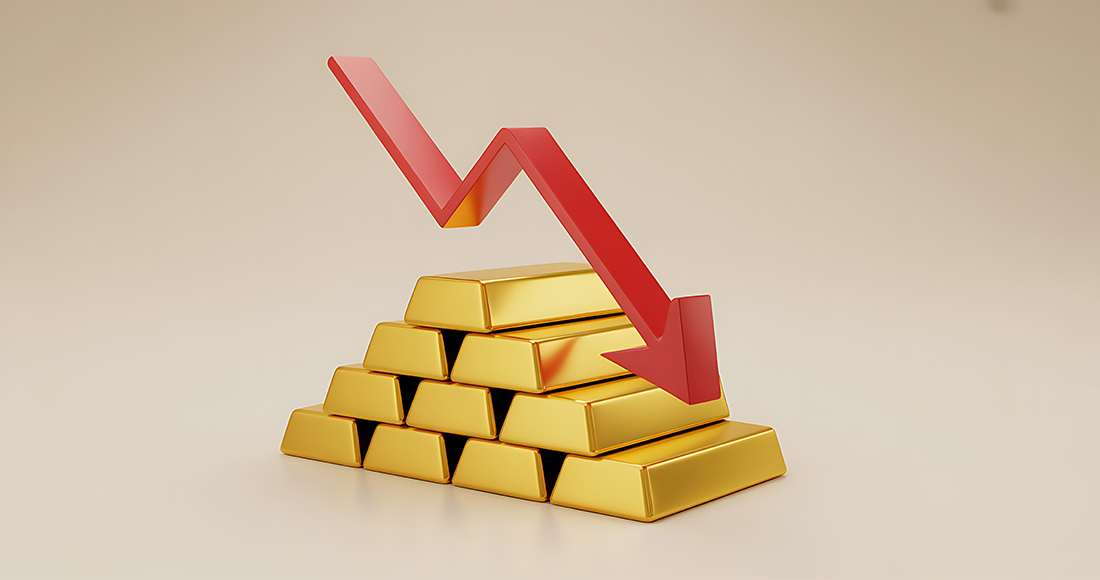
The result? Gold shed nearly ₹1 lakh in a single session. International spot gold prices dropped sharply, and with the rupee holding its ground, the fall was equally brutal in Indian markets.
Why Does War Make Gold Expensive, And Peace Make It Cheap?
This is one of those things that sounds paradoxical until you understand how financial markets think. Gold doesn't pay dividends. It doesn't generate income. Its value is almost entirely built on perception, specifically, the perception of safety.
When the world feels stable, investors prefer assets that grow stocks, real estate, and bonds. But when a war breaks out, when oil prices spike, when currencies shake, people sprint toward gold. That's what drove gold to its peak over the last three weeks.
Now, with whispers of a ceasefire and diplomatic talks gaining traction, some of that fear of premium has deflated. Investors who bought gold as insurance are beginning to cash out. Hedge funds that piled in during the war jitters are rotating back to equities. And that sells pressure cascades quickly.
For Indian buyers and borrowers, this dynamic has very real, very practical consequences.
"Gold is the world's oldest insurance policy. Right now, that insurance just got cheaper, but for gold loan borrowers, it also just got riskier."
Gold Loans in India: What Borrowers Need to Know Right Now
India has one of the world's largest gold loan markets. Banks & NBFC collectively disburse tens of thousands of crores in gold loans every year. For millions of households, especially in Kerala, Tamil Nadu, Andhra Pradesh, and Karnataka, a gold loan is the first call when cash is needed quickly.
Here's the catch: gold loans are directly tied to the market price of gold at the time of pledge, and they are governed by RBI's strict loan-to-value (LTV) norms.
How the LTV Rule Works
The Reserve Bank of India mandates that gold loans cannot exceed 75% of the current market value of the pledged gold. So, if you pledged gold worth ₹10 lakh when you borrowed, your maximum eligible loan is ₹7.5 lakh.
Now imagine gold's value has fallen to ₹9 lakh. Suddenly your loan of ₹7.5 lakh represents 83% of the collateral value, breaching the 75% cap. Your lender will contact you. They will ask you to either repay a portion of the principal, deposit additional gold to top up the collateral, or face the prospect of the lender auctioning your pledged jewellery to recover dues.
A Simple Illustration:
| Scenario | Gold Value | Loan Outstanding | LTV Ratio | Status |
|---|---|---|---|---|
| Before price drop | ₹10,00,000 | ₹7,00,000 | 70% | Safe |
| After ₹1L drop | ₹9,00,000 | ₹7,00,000 | 77.8% | Margin Call |
| After ₹2L drop | ₹8,00,000 | ₹7,00,000 | 87.5% | Risk of Auction |
Alert: If you have an outstanding gold loan, a single-day drop of this magnitude could push your loan-to-value ratio above the RBI-mandated 75% ceiling, triggering a margin call or forced repayment notice from your lender.
Will Gold Loan Interest Rates Change?
This is a question many borrowers are asking right now, and the honest answer is: probably not immediately, but the pressure is building.
Gold loan interest rates in India currently range from about 7% to 24% per annum, depending on the lender and the scheme. Banks like SBI and Canara Bank offer lower rates for agricultural gold loans, while NBFCs and private lenders charge higher rates for flexibility and speed.
When gold prices fall sharply, lenders face higher risks on their existing portfolios. To compensate, some may quietly tighten new disbursement norms, lower LTV offers, stricter eligibility, or slightly higher rates on fresh loans. However, existing borrowers with fixed-rate contracts won't see their interest rates change unless they renew or restructure.
What could change is the broader RBI interest rate environment. If the war drags on and inflation spikes due to oil prices remaining elevated, RBI may hold rates higher for longer. If peace breaks out and oil falls, RBI could have room to cut rates, which would ease gold loan EMIs for floating-rate borrowers.
Pro Tip: If your gold loan is up for renewal in the next 30–60 days, consider renewing early at current rates before lenders potentially revise upward in response to portfolio risk. Lock in rates now if your lender allows it.
Should You Buy More Gold Now, Or Wait?
Honestly? This is the question every Indian household is wrestling with today. And there's no single right answer, but there is a smart framework to think through it.
The price drop is real, but the war is not over. As of today, US and Israeli strikes on Iran are continuing. Iran is still launching missile attacks across the Gulf. The Strait of Hormuz remains under threat. This means the geopolitical risk premium in gold hasn't fully evaporated; it has just partially deflated diplomatic hopes.
If talks collapse, which is entirely possible, given that Israel has clearly stated it will not be part of any negotiations and will continue military operations, gold could spike right back up. If a genuine ceasefire takes hold, gold may continue to slide toward pre-war levels.
For long-term investors, a dip of this magnitude is historically a reasonable accumulation opportunity. Gold's structural case, India's wedding season demand, central bank buying, dollar weakness, hasn't changed. For short-term traders, volatility cuts both ways.
Quick Decision Framework:
Long-term investor (5+ years): Consider staggered buying, invest in small lots over the next 4–6 weeks rather than a lump sum. Sovereign Gold Bond (SGB) subscriptions, if open, remain an excellent tax-efficient vehicle.
Short-term trader: Wait for diplomatic clarity before entering. The risk of fresh escalation is very real.
What Should Gold Loan Borrowers Do Right Now?
If you currently have a gold loan, here's your practical action checklist:
1. Check out your outstanding loan balance and compare it to the current value of your pledged gold at today's market rate.
2. Call your lender and ask for your current LTV ratio. Don't wait for them to call you.
3. If your LTV is above 70%, proactively repay a small portion of the principal to create a safety buffer.
4. If you have additional gold at home, consider pledging it as top-up collateral before a margin call arrives.
5. Do NOT ignore any communication from your lender. Lenders are legally allowed to auction pledged gold if LTV norms are breached, and you fail to respond within the stipulated notice period.
6. Consider closing high-interest gold loans (above 18%) and refinancing with a bank at lower rates if your credit profile qualifies.
The Bigger Picture: India, War, and Your Money
India imports roughly 800–900 tonnes of gold every year, making it the world's second-largest consumer. Every rupee that gold moves in the international market matters here more than almost anywhere else. And it's not just about investments, it's about temple trusts, wedding savings, farmers who pledge gold every rabi season, and women who have worn the same necklace for two decades, knowing it's their emergency fund.
The US-Iran war has reminded us once again that global geopolitics doesn't stay global for long. It lands in your bank statement, in your loan account, in the price your jeweller quotes when you walk in on a Thursday morning.
Keep watching. Stay informed. And if you have a gold loan, check out your LTV today. Not tomorrow. Today.
Frequently Asked Questions
Why did gold price drop by ₹1 lakh in one day?
The US-Iran war had pushed gold to historic highs as investors sought safety. When diplomatic backchannels opened and ceasefire hopes emerged on March 25, 2026, the fear premium unwound rapidly. Institutional investors sold gold positions quickly, causing the sharp single-day decline.
How does a gold price fall affect my gold loan?
A falling gold price reduces the value of your collateral. If your outstanding loan as a percentage of current gold value exceeds the RBI's 75% LTV cap, your lender will issue a margin call, asking you to repay part of the loan or pledge additional gold. Failure to respond may result in your pledged gold being auctioned.
Should I repay my gold loan now that prices have fallen?
If your LTV is approaching or exceeding 75%, partial repayment is a prudent step to protect your collateral. If you are comfortably within the limit, monitor the situation closely but there's no immediate need to rush. Focus on your LTV ratio, not the price chart alone.
Will gold prices recover after the US-Iran war ends?
Historically, yes. Gold tends to recover and reach new highs once post-war instability settles, and central banks resume buying cycles. However, in the short term, a peace deal could push gold lower before it rebuilds. India's structural demand, weddings, festivals, reserve accumulation, provides a solid long-term floor.
Conclusion
Gold's ₹1 lakh single-day crash is not just a headline, it is a wake-up call for every Indian who owns gold, holds a gold loan, or is planning to invest in the yellow metal.
The US-Iran war has shown us how quickly the world can change. In a matter of weeks, geopolitical chaos pushed gold to record highs. And now, the first whisper of peace has pulled it back sharply. This kind of volatility is not going away anytime soon, not while bombs are still falling, and diplomats are still talking in back-channels.
Here's what this moment is really telling us:
If you are a gold loan borrower, act now. Don't wait for your lender to call you. Check your LTV, talk to your bank, and create a cushion before the situation worsens. Your grandmother's necklace deserves better than being auctioned in a bank notice.
If you are an investor, resist the urge to make impulsive decisions in either direction. Don't panic-sell if you hold gold. Don't blindly buy just because prices dipped. Use the staggered approach, keep your horizon long, and let the dust of the war settle before making big moves.
And if you are simply someone trying to understand what's happening, you now know. Global wars are no longer distant events on news tickers. They shape the price of the gold in your locker, the EMI on your loan, and the rate your bank offers tomorrow morning.
Stay informed. Stay prepared. And remember, in times of uncertainty, knowledge is the only asset that never loses value.