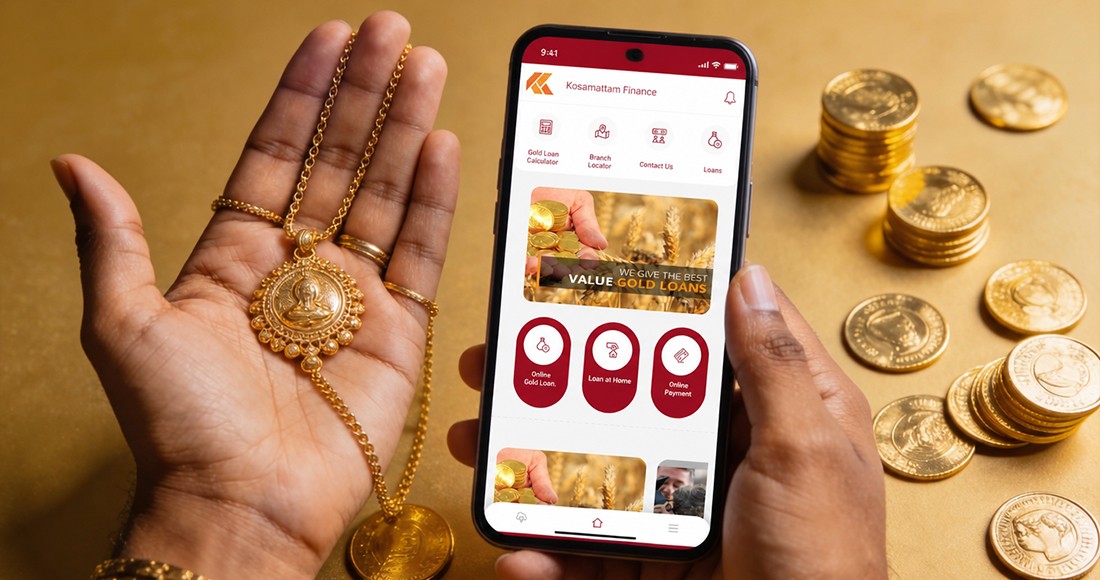
Thinking of taking a gold loan? Find out how gold loans are reported to CIBIL, what affects your credit score, and the best ways to use a gold loan without harming your credit profile.
The Short Answer
Yes, a gold loan affects your CIBIL score, but not in the way most people assume. It's not the loan itself that hurts you. It's how you handle it.
A gold loan is treated as a secured loan, just like a home loan or a loan against property. Lenders report your account activity, EMI payments, interest payments, closure status, and any default, to credit bureaus like CIBIL, Experian, and Equifax every month. So, the moment you take a gold loan, it starts shaping your credit story, for better or worse.
If you've landed here searching for "gold loan CIBIL score effect," you probably already have a gold loan in mind, or you've taken one and are watching your score nervously. Either way, let's break this down properly, without the jargon.
Wait, Don't All Loans Affect Your Score?
Yes, technically. But gold loans have a few quirks that make them behave a little differently from personal loans or credit cards.
Here's why: a gold loan is backed by collateral, your gold jewellery or coins sit with the lender as security. Because the lender already holds something valuable against the loan, the risk profile of a gold loan is lower in the eyes of credit bureaus compared to an unsecured personal loan. That doesn't mean it's invisible to your score. It means the way it influences your score is slightly gentler, as long as you're consistent.
How Does a Gold Loan Actually Get Reported?
Every month, your lender (bank or NBFC) sends a report to the credit bureaus containing:
- Loan amount sanctioned
- Outstanding balance
- EMI or interest payment status
- Days past due, if any
- Loan closure status
This data forms part of your credit report, which CIBIL uses to calculate your score (ranging from 300 to 900). Some gold loans work like a regular EMI loan, while others are interest-only with a bullet repayment of the principal at the end of the tenure. Either structure gets reported, so don't assume an interest-only gold loan is somehow "off the books." It isn't.
5 Ways a Gold Loan Can Improve Your CIBIL Score
People often think of gold loans only as something that can hurt them. Used responsibly, they can actually do the opposite.
1. It Diversifies Your Credit Mix
Credit bureaus like to see a healthy mix of secured and unsecured credit. If your credit report is full of credit cards and personal loans, adding a secured gold loan and repaying it well can balance that mix and reflect positively over time. Most lenders publish their gold loan interest rates upfront, which makes it easier to plan repayment before you even apply.
2. It Builds (or Rebuilds) Credit History
If you have little to no credit history, a gold loan is one of the easiest ways to start building one. Approval is quick, eligibility criteria are lenient since the gold itself is the security, and timely repayment creates a positive track record from month one.
3. On-Time EMI Payments Boost Your Score
Payment history is the single biggest factor in your CIBIL score; it typically carries the heaviest weight among all scoring factors. Every on-time gold loan EMI is a small deposit into your credit trust account.
4. Lower Credit Utilization, Lower Stress on Other Lines
Using a gold loan to pay off high-interest credit card debt or to avoid maxing out a credit limit can actually improve your credit utilization ratio, which has a direct positive effect on your score.
5. Timely Closure Reflects Discipline
When you close a gold loan as agreed, not early in a way that looks erratic, not late in a way that looks risky; it shows lenders a pattern of disciplined borrowing, which helps future loan applications too.
5 Ways a Gold Loan Can Hurt Your CIBIL Score
Now, most people are actually worried about that part.
1. Missed or Delayed EMI Payments
This is the big one. A single missed payment can be reported to the bureau and stay on your record for years. Even a delay of a few days, if reported as "days past due," can ding your score.
2. Loan Default and Auction of Gold
If you stop repaying altogether, the lender has the right to auction your pledged gold to recover the dues. This isn't just a financial loss; it's reported as a default or written-off account, which is one of the most damaging entries possible on a credit report.
3. Frequent Gold Loan Applications
Every time you apply for a loan, the lender pulls off your credit report, creating what's called a "hard inquiry." Multiple hard inquiries in a short span, say, applying to five lenders within a month because one rejected you, can lower your score and make you look like credit hungry.
4. High Loan-to-Value (LTV) Utilization
Taking the maximum loan amount against your gold's value repeatedly or renewing the loan again and again without significant repayment, can signal financial stress to lenders, even if it doesn't directly show up as a negative score factor. A gold loan calculator can help you work out a borrowing amount you can comfortably repay, rather than stretching to the maximum eligible value every time.
5. Closing the Loan Through Settlement
If you're unable to repay in full and the lender agrees to "settle" the account for a lower amount, it gets marked as "settled" rather than "closed" on your report. A settled status is far more damaging than a normal closure and can affect your score for years.
Gold Loan vs Personal Loan: Which Affects Your Score More?
If you're still weighing the two options beyond just the credit score angle, things like interest rates, tenure, and eligibility, it's worth reading this detailed comparison of gold loans and personal loans before you decide.
| Factor | Gold Loan | Personal Loan |
|---|---|---|
| Collateral | Yes (gold) | No |
| Interest rate | Generally lower | Generally higher |
| Approval speed | Same day, often | 1–7 days |
| Impact of default | Gold auctioned + score hit | Score hit + legal recovery |
| Effect of timely repayment | Positive | Positive |
| Effect of missed EMI | Negative | Negative (often slightly more weight) |
The core lesson: it's not the type of loan that determines the score impact nearly as much as your repayment behavior.
How to Take a Gold Loan Without Hurting Your CIBIL Score
A few practical habits go a long way:
- Borrow only what you need. Don't max out the loan-to-value ratio just because it's available. Reviewing the eligibility and documentation requirements beforehand can help you borrow with a clearer plan rather than reactively.
- Set up auto-debit or reminders for EMI or interest payment dates so nothing slips.
- Avoid frequent renewals of the same loan without reducing the principal meaningfully.
- Don't apply to multiple lenders at once. Compare offers online first, then apply to one.
- Check out your credit report periodically to confirm the lender is reporting your gold loan accurately; errors do happen, and they can quietly drag your score down
- Close the loan formally rather than letting it lapse into auction or settlement.
Frequently Asked Questions
Does taking a gold loan reduce my CIBIL score immediately?
No. Simply taking a gold loan doesn't automatically reduce your score. A hard inquiry from the application may cause a very minor, temporary dip, but the larger impact comes later, based on how you repay it.
Will my CIBIL score improve after I close my gold loan?
Yes, typically. A loan closed on time and reported as "closed" (not "settled") adds a positive entry to your credit history, which can support a gradual score improvement over the following months.
Does a gold loan show up on my CIBIL report if I take it from a small NBFC?
Most regulated lenders, including NBFCs, are required to report to credit bureaus. If a specific small lender doesn't report at all, the loan may not appear on your report, but this also means it won't help build your credit history either.
What happens to my CIBIL score if my gold is auctioned?
If your gold is auctioned due to non-repayment, the account is typically marked as a default or write-off. This is one of the more serious negative marks on a credit report and can significantly lower your score.
Is a gold loan better for my credit score than a credit card?
Neither is inherently "better"; both can help or hurt depending on repayment discipline. Gold loans tend to have fixed EMIs or clear repayment terms, which can make consistent repayment easier to track and stick to.
Final Word
A gold loan is, in many ways, one of the more forgiving credit products available, fast approval, lower interest rates, and a secured structure that lenders view lower risk. But "forgiving" doesn't mean "consequence-free." Treat it the way you'd treat any other formal debt: borrow what you need, track your due dates, and close it the right way. Do that, and a gold loan can quietly work in favor of your CIBIL score rather than against it.
Lenders differ in how they structure and report these loans, so it's worth checking the specifics with whoever you borrow from. NBFCs like Kosamattam Finance, for instance, offer both EMI-based and interest-only gold loan structures, and the repayment option you choose will shape how the loan shows up on your credit report over time.